

When to use it
- Print and packaging: a menu URL, a product PDF, a review link.
- Contact sharing: a vCard on a business card or booth banner.
- Events: an add-to-calendar code on a poster.
- Wifi: a scan-to-join code for a cafe or office.
- One code, many destinations: a Multi-URL list for a campaign hub.
How to use it
1
Open the generator
Sidebar → QR Code Generator → Create code.
2
Choose what the code does
Pick a content type. Website links to any URL. Contact, Wi-Fi, Event and Plain text are held inside the code itself. Others compose an action, such as WhatsApp, Email, SMS or Phone.
3
Fill the content
Enter the fields for the type you picked. Add a Title (required), and optional Tags and Folder to organize it.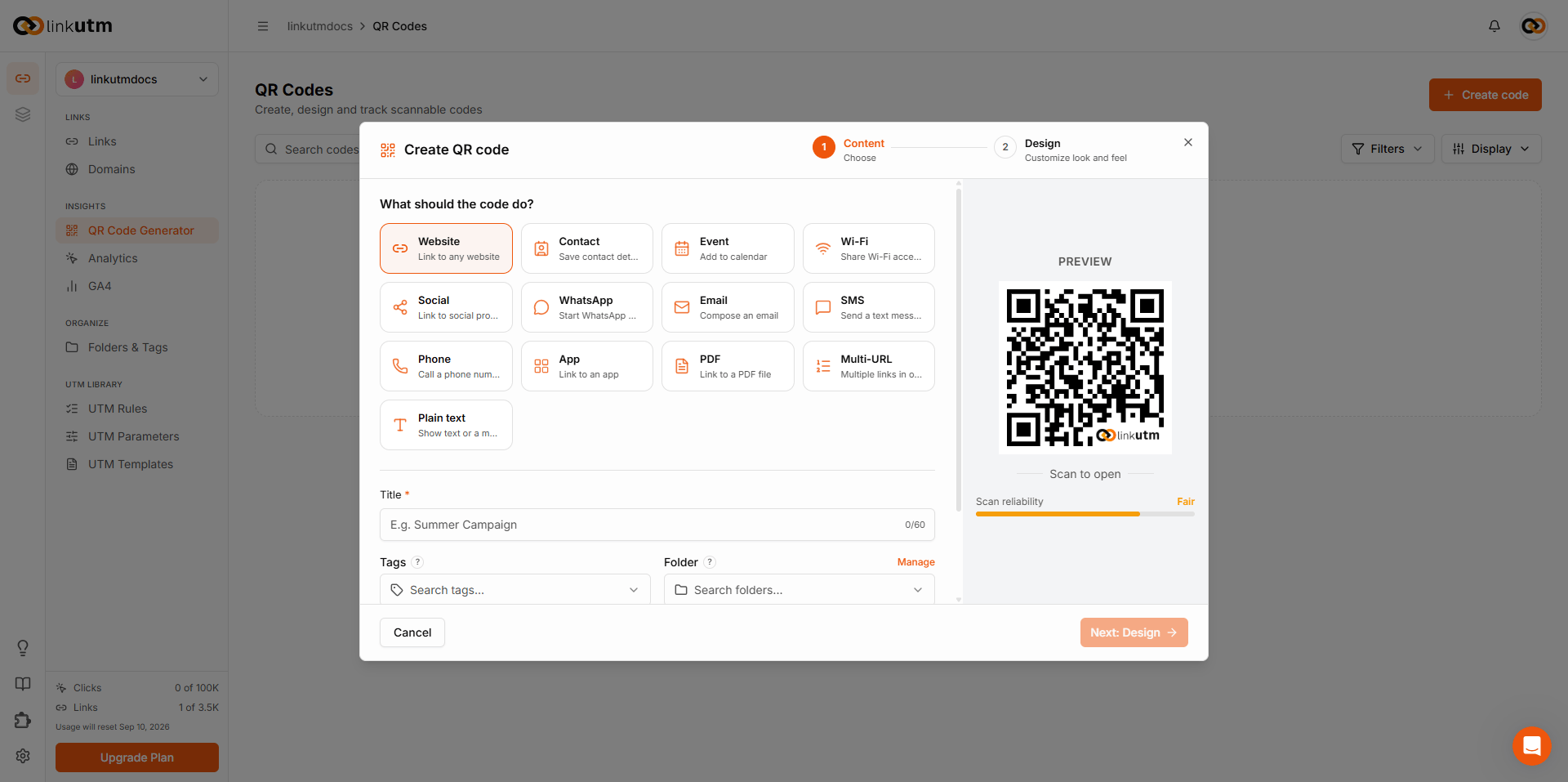
4
Design the code
Click Next: Design and customize the look. The controls match the link QR panel. The preview updates in real time and shows a scan reliability meter.
5
Save and download
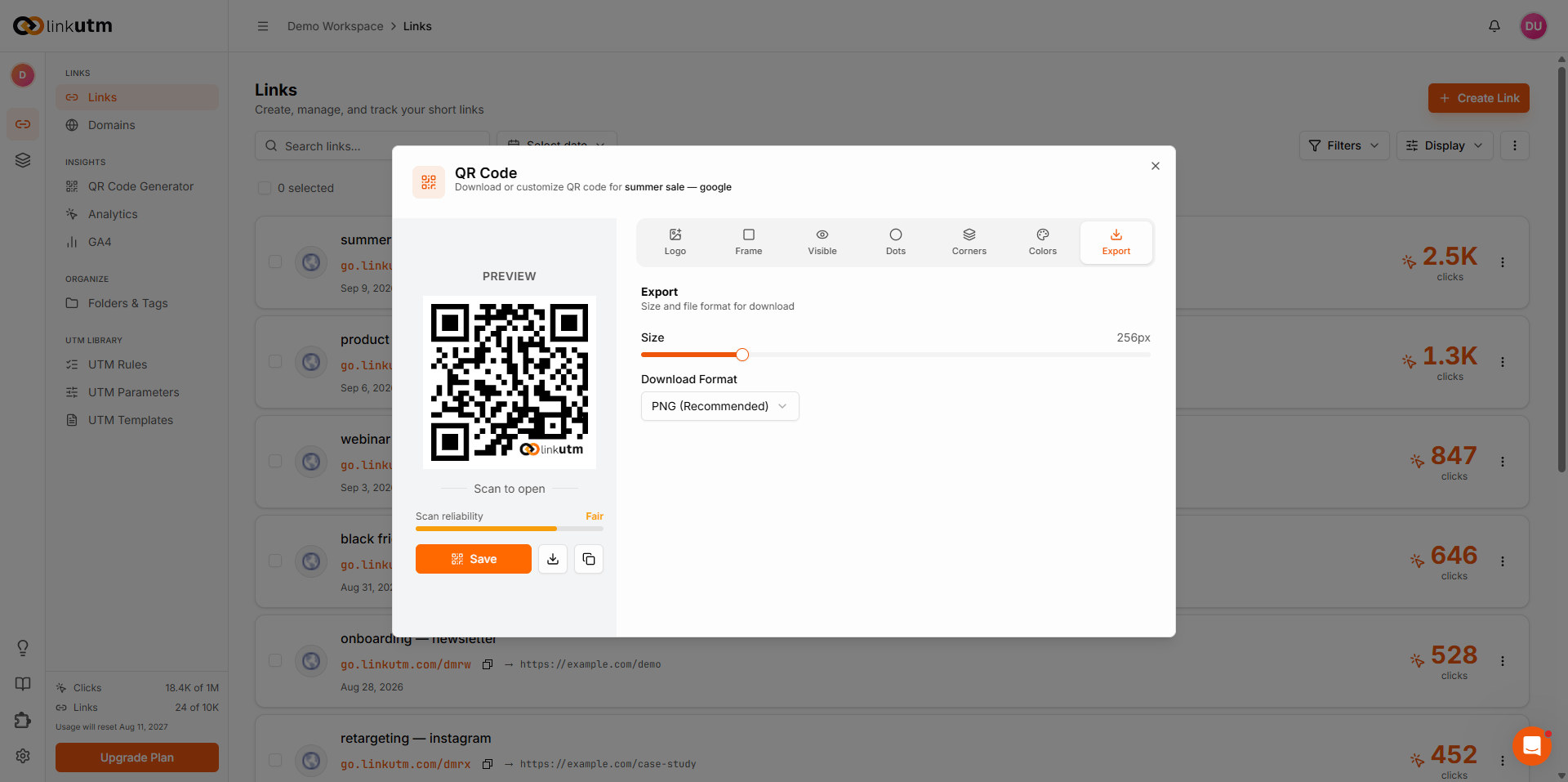
Click Save. Download as PNG, SVG or JPEG for print or screen.
Content types
Two groups. Redirect types send the scanner to a destination and behave like a normal short link. Hosted types carry their data in the code, and linkutm serves a page for them on scan. Both run through the short link, so both are tracked.Design
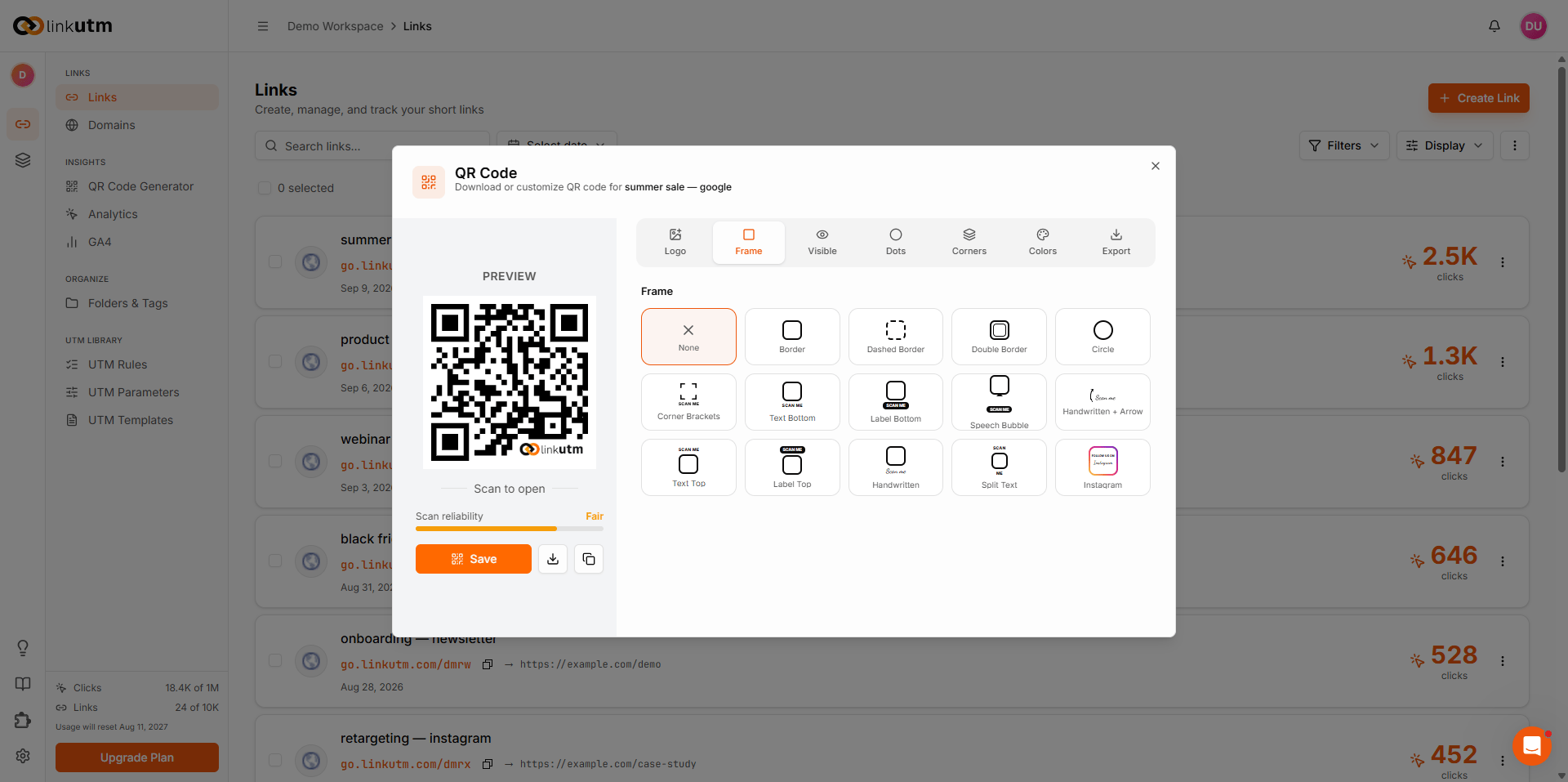
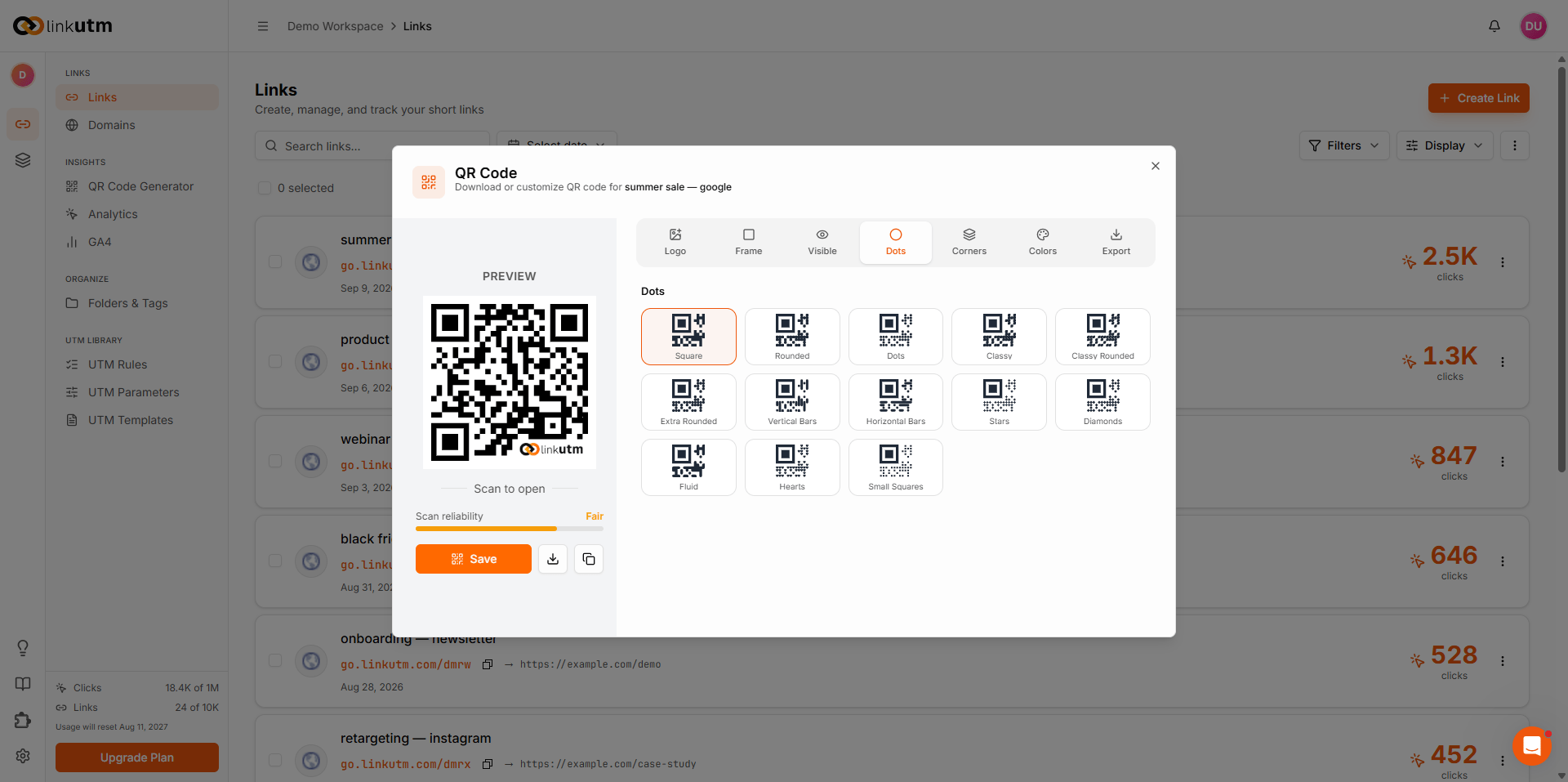
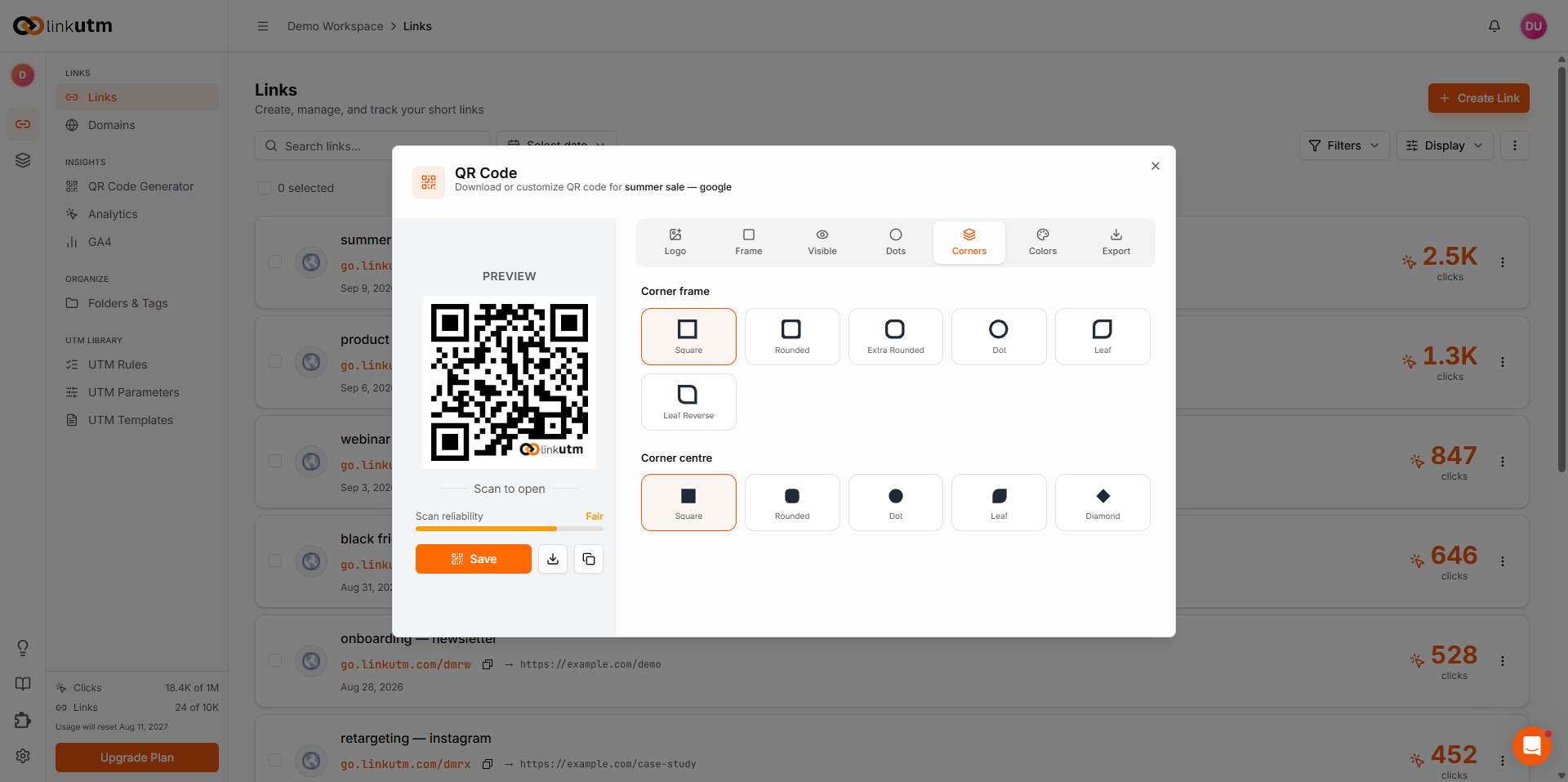
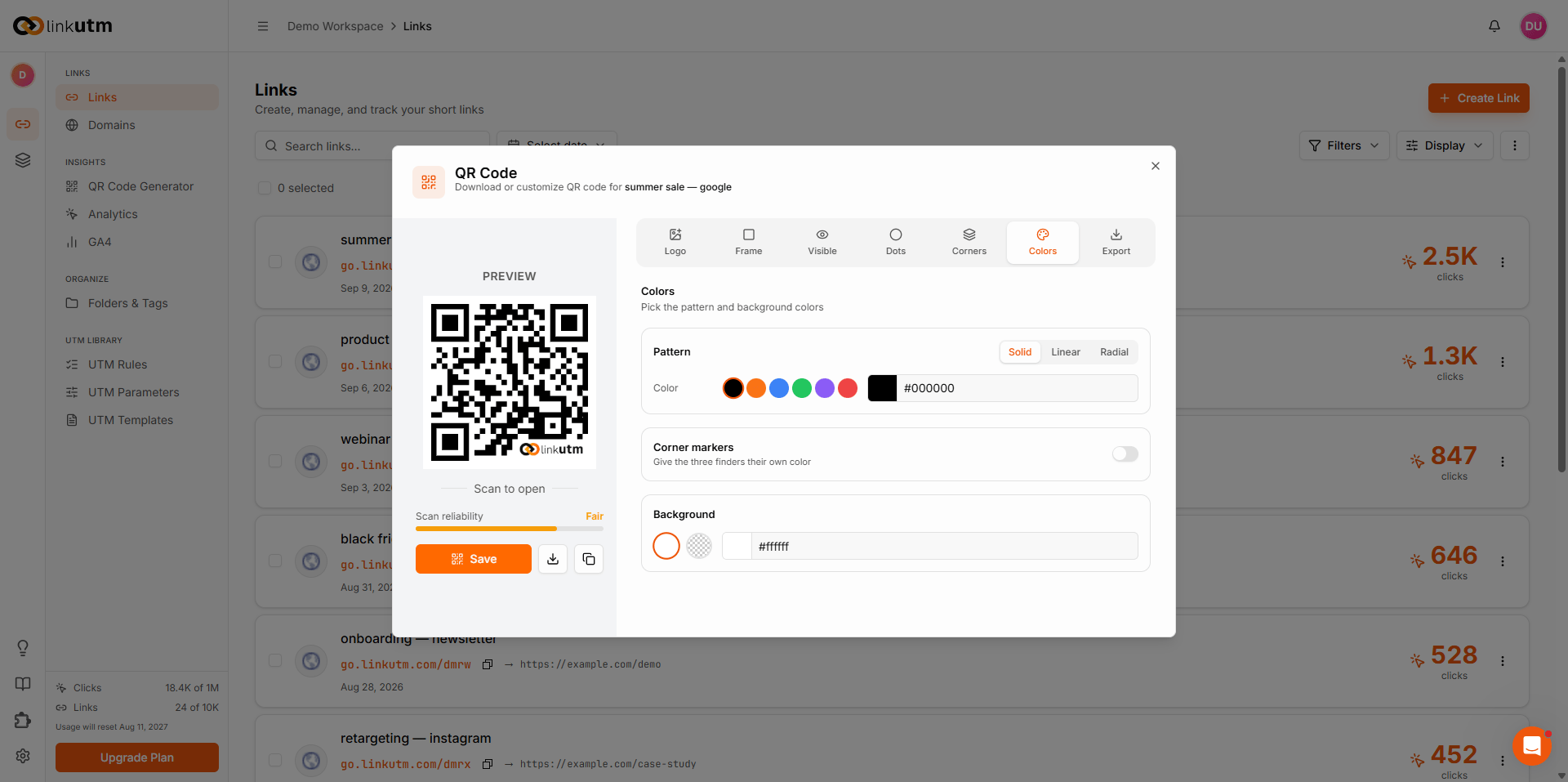
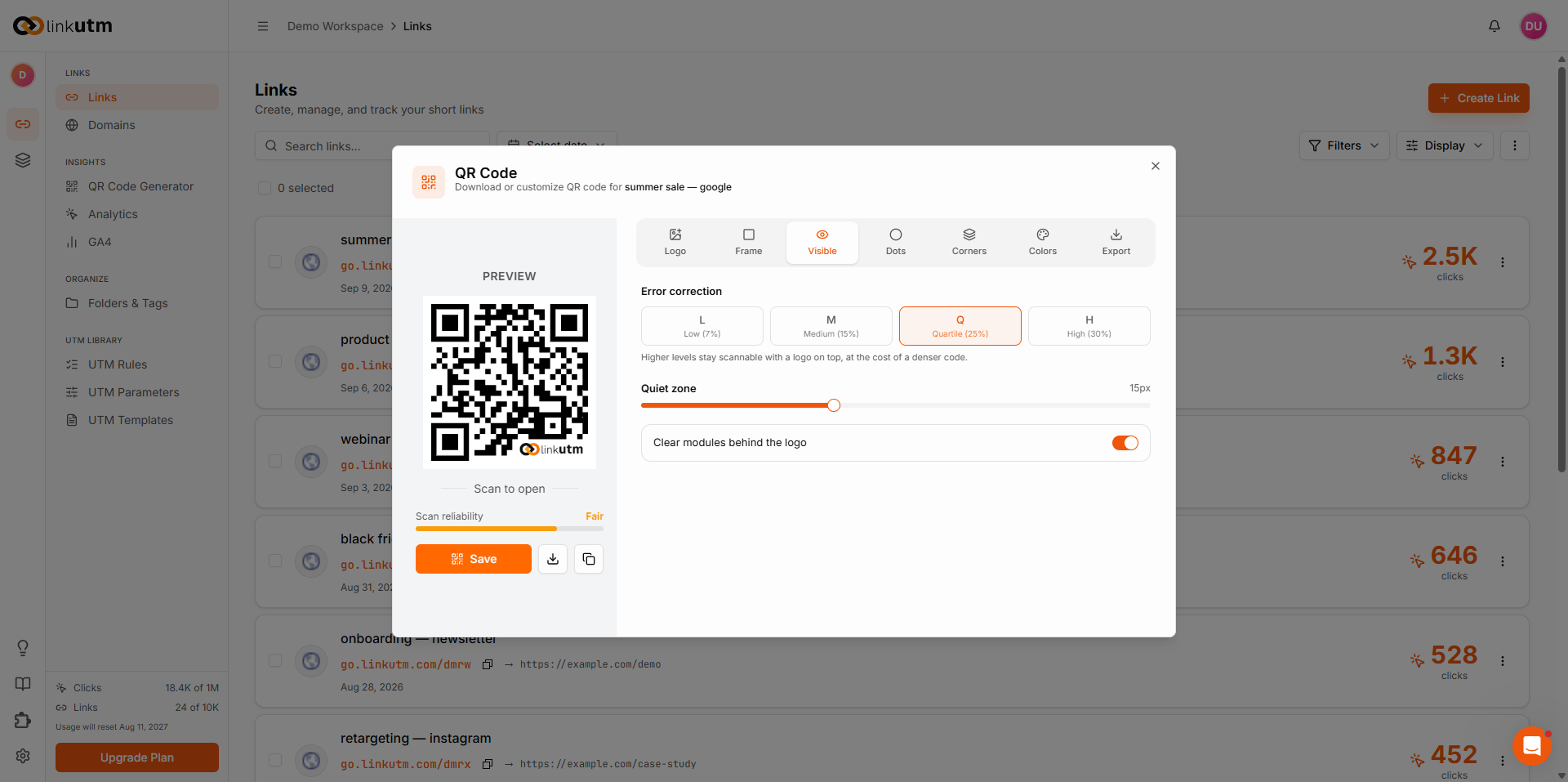
The design step is the same as the link QR customization. Seven tabs, each controlling a different visual aspect of the code, plus export. Logo. Place a logo or icon in the center. Upload an image, enter text or pick a social media preset: linkutm, WhatsApp, Facebook, Instagram, Twitter/X, YouTube, LinkedIn, Telegram or TikTok.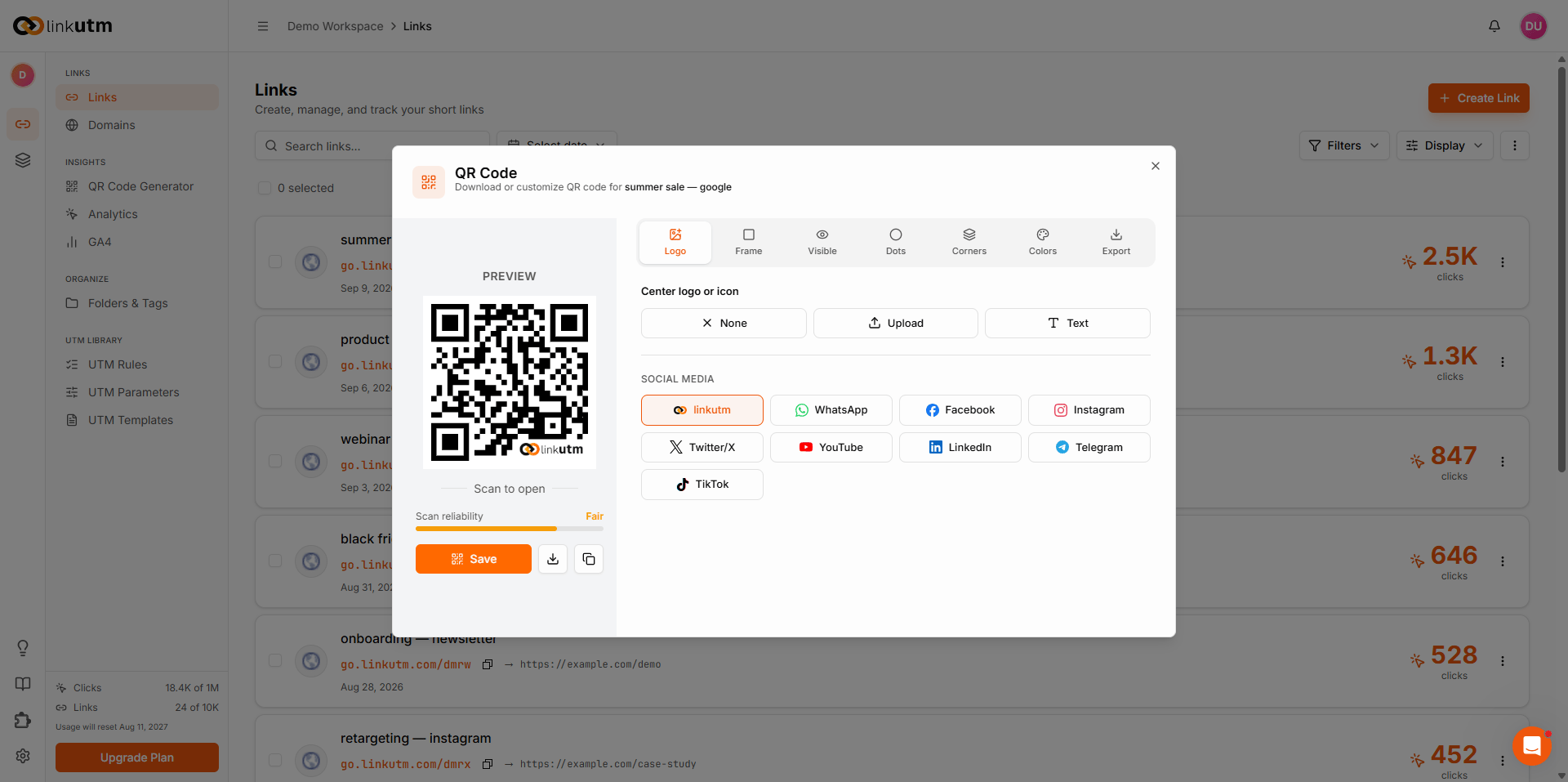
Tracking and quota
Every QR code creates a short link on your workspace domain (for examplego.linkutm.com/menu-2025). Scans are logged as clicks, with location, device, browser and referrer, the same as a link. Because each code is a short link, it counts toward your plan’s link allowance.
View scan analytics under Analytics, using the Links / QR selector to switch between short link clicks and QR scans. See Analytics. To see one code on its own, click its tile in the QR Codes list.
Organize
QR codes use the same folders and tags as links. In Folders & Tags, each folder and tag shows two counts: links and QR codes. QR codes are counted separately from links, so a folder can hold both. See Folders & Tags.Real-world example
Restaurant table QR for the menu:Common mistakes
Changing the slug after print
Changing the slug after print
Editing a code’s content or design keeps the same short link, so printed codes keep working. Changing the slug does not. Lock the slug before you print.
Logo making the code unscannable
Logo making the code unscannable
A large or busy center logo lowers scan reliability. Keep the logo small and watch the reliability meter in the preview. It warns before the code stops scanning.
Looking for QR codes in the Links list
Looking for QR codes in the Links list
QR codes do not appear on the Links page. They live under QR Code Generator. The Links list shows short links you created directly.
Edge cases
Deleting a code deletes its short link. Scans stop resolving. Scan history already recorded is kept for reporting.
Archiving keeps a code active. An archived code still resolves and tracks scans. It is hidden from the QR Codes list until you turn on Show archived in the display filters.